

Markets don’t move randomly—they move in cycles. If you’re searching for a clearer way to grow and protect your wealth, understanding economic cycle investing is one of the most powerful strategies you can adopt. Instead of reacting to headlines or chasing short-term trends, this approach helps you position your portfolio based on where the economy is headed next.
In this article, you’ll learn how economic cycles influence asset performance, which sectors typically outperform in each phase, and how to adjust your allocations with confidence. We break down complex macroeconomic signals into practical, actionable steps you can apply immediately.
Our insights are grounded in rigorous market analysis, historical performance data, and time-tested financial principles used by seasoned investors. By the end, you’ll have a clearer framework for navigating expansions, slowdowns, and recoveries—so you can invest strategically, not emotionally.
Aligning Your Portfolio with the Pulse of the Economy
I used to think a diversified portfolio was enough. When markets turned, I blamed bad luck instead of my rigidity. The truth? Static allocations ignore momentum.
I held growth stocks into a slowdown and clung to bonds during expansion. Painful lesson.
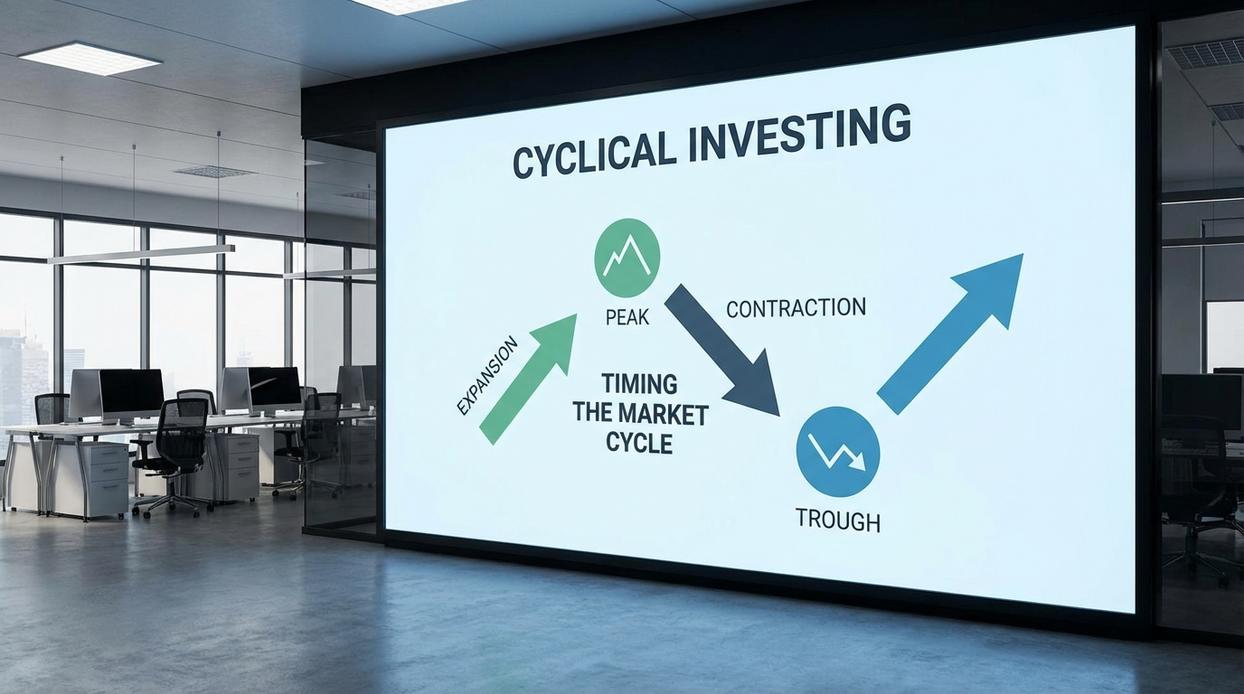
Economic cycle investing taught me to watch four phases:
• Expansion: equities, small caps, real estate surge.
• Peak: trim risk, raise cash.
• Contraction: defensive sectors, quality bonds outperform.
• Trough: accumulate cyclicals before recovery headlines.
Monitor GDP trends, yield curves, and unemployment data (yes, it’s boring) to adjust early. Stay proactive always.
I remember staring at my portfolio in early 2009, wondering whether the market would ever recover. That moment taught me more about the four phases of the economic cycle than any textbook could.
Phase 1: Expansion. This is when GDP (gross domestic product, or the total value of goods and services produced) rises steadily, unemployment falls, and corporate profits climb. Confidence builds. Businesses hire. Consumers spend. It feels a bit like the training montage in a sports movie—momentum everywhere. According to the National Bureau of Economic Research (NBER), expansions have historically lasted longer than contractions, which often surprises new investors.
Phase 2: Peak. Eventually, growth slows. Inflation (a general rise in prices) may accelerate, prompting central banks like the Federal Reserve to raise interest rates (Federal Reserve, 2023). Asset valuations can stretch beyond fundamentals. Some argue you can’t spot a peak in real time—and they’re right, it’s difficult. Still, overheating signals shouldn’t be ignored.
Phase 3: Contraction (Recession). GDP declines for two consecutive quarters, unemployment rises, and earnings fall. Fear replaces optimism. This is where economic cycle investing becomes critical.
Phase 4: Trough. Sentiment is bleak, yet opportunity quietly forms. Pro tip: watch leading indicators, not headlines. Recovery often begins when confidence is lowest (painful, but powerful).
The Investor’s Playbook for the Expansion Phase
In an expansion, growth is the priority. That means overweighting assets that directly benefit from rising GDP, strong hiring, and easy credit.
Specifically, technology companies tend to lead because they scale revenue quickly as business investment accelerates. Meanwhile, consumer discretionary firms—automotive, luxury goods, travel—capture higher household spending. Industrials also benefit from infrastructure orders and capital expenditures.
As a result, optimal allocation shifts toward equities, especially growth and small-cap stocks that are more sensitive to economic momentum. At the same time, trimming long-term government bonds and excess cash can reduce opportunity cost.
This approach reflects economic cycle investing, which aligns portfolio weightings with measurable phases of expansion and contraction. Finally, the High-Yield Wealth Model emphasizes riding market momentum as confidence lifts earnings, margins, and valuations. When consumers feel optimistic, non-essential brands often see profits surge first.
Consequently, disciplined rebalancing and clear sector targets help capture upside while managing volatility. In short, lean into growth, monitor data trends, and let expanding fundamentals do the heavy lifting. Stay proactive and selective.
Defensive Portfolio Strategies for Peaks and Contractions
When markets shift from expansion to contraction, your strategy should shift too. Growth-first investing works in booms; capital preservation wins in downturns. That’s the core idea behind economic cycle investing—adjusting allocations based on where we are in the business cycle.
So what changes?
-
Recession-Resistant Sectors vs. Cyclical Stocks
Consumer Staples, Healthcare, and Utilities provide essentials—food, medicine, electricity. People cut vacations before they cut groceries. In contrast, cyclical sectors like luxury retail or speculative tech often see sharper earnings declines. While some argue beaten-down growth stocks offer bigger rebounds, timing that bottom is notoriously difficult (just ask anyone who bought “the dip” too early in 2008). -
Bonds vs. Equities for Stability
High-quality government and investment-grade corporate bonds typically gain appeal as investors seek safety. Historically, U.S. Treasuries have acted as a hedge during equity drawdowns (Source: Federal Reserve historical data). Stocks may deliver higher long-term returns, but bonds often reduce volatility when you need it most. -
Cash Reserves vs. Full Deployment
Trimming overvalued, high-volatility positions and building “dry powder” creates flexibility. Critics say cash loses to inflation; however, liquidity during a trough lets you buy quality assets at discounts.
For fund structure considerations, see etf vs mutual fund an expert comparison for investors.
Seizing Opportunity in the Trough and Early Recovery
The trough of a recession feels uncomfortable (headlines rarely sound optimistic). But this is often where the best long-term returns begin. Primary strategy: buy quality assets at a discount. When fear peaks, prices can fall below intrinsic value—meaning an asset’s true underlying worth based on cash flow, earnings power, and balance sheet strength.
Some investors argue it’s safer to wait for clear confirmation of recovery. That caution is understandable. However, by the time data looks strong, markets have usually already moved. In economic cycle investing, timing the early recovery phase can significantly improve upside potential.
Leading sectors to watch:
- Financials: Banks benefit from a steepening yield curve, which improves lending margins.
- Real Estate: Property values and REITs often rebound as credit conditions ease.
Shift focus toward value over growth—companies with steady cash flow and manageable debt trading at discounts.
To execute a smart rotation:
- Gradually reduce exposure to defensive assets like bonds and utilities.
- Reallocate toward cyclicals such as industrials and financials.
Pro tip: Scale in gradually instead of investing all at once to manage volatility.
Understanding economic cycles requires practical, measurable signals. First, Gross Domestic Product (GDP) tracks the total value of goods and services produced; more importantly, its quarter-over-quarter growth rate reveals momentum shifts before headlines do. Next, the unemployment rate, a lagging indicator, confirms contractions when joblessness rises steadily across several months. Meanwhile, inflation, measured by the Consumer Price Index (CPI), highlights overheating when prices climb persistently. Finally, the yield curve offers forward-looking insight; an inversion, where short-term yields exceed long-term yields, has preceded every U.S. recession since 1955 (Federal Reserve). Together, these tools strengthen economic cycle investing decisions. For disciplined portfolio positioning.
Back in 2020, when markets whiplashed in months, investors learned a hard truth: static portfolios break. A dynamic, all-weather approach relies on economic cycle investing and knowing what thrives in each phase:
- Expansion
- Peak
- Contraction
- Recovery
Align assets proactively, and performance compounds through time. Adjust allocations as conditions shift, not after losses have mounted.
Mastering Momentum Through Smart Market Timing
You came here to understand how to navigate shifting markets with confidence—and now you have a clearer framework for doing exactly that. By applying economic cycle investing principles, aligning your portfolio with market phases, and focusing on disciplined allocation, you’re no longer reacting emotionally to volatility. You’re acting strategically.
Market uncertainty is what holds most investors back. Missed opportunities, poorly timed entries, and inconsistent returns often stem from not recognizing where we are in the cycle. That pain point ends when you start using structured, data-driven strategies instead of guesswork.
Now it’s time to act. Review your current portfolio, identify which phase of the cycle we’re in, and rebalance accordingly. If you want proven frameworks, smarter allocation models, and high-yield wealth strategies trusted by serious investors, start leveraging our top-rated insights and tools today. Don’t let the next market shift catch you off guard—take control now and position your portfolio for the next wave of growth.
 Founder & CEO
There is a specific skill involved in explaining something clearly — one that is completely separate from actually knowing the subject. Jorveth Ollvain has both. They has spent years working with smart budgeting tools in a hands-on capacity, and an equal amount of time figuring out how to translate that experience into writing that people with different backgrounds can actually absorb and use.
Jorveth tends to approach complex subjects — Smart Budgeting Tools, Investment Portfolio Insights, Market Momentum being good examples — by starting with what the reader already knows, then building outward from there rather than dropping them in the deep end. It sounds like a small thing. In practice it makes a significant difference in whether someone finishes the article or abandons it halfway through. They is also good at knowing when to stop — a surprisingly underrated skill. Some writers bury useful information under so many caveats and qualifications that the point disappears. Jorveth knows where the point is and gets there without too many detours.
The practical effect of all this is that people who read Jorveth's work tend to come away actually capable of doing something with it. Not just vaguely informed — actually capable. For a writer working in smart budgeting tools, that is probably the best possible outcome, and it's the standard Jorveth holds they's own work to.
Founder & CEO
There is a specific skill involved in explaining something clearly — one that is completely separate from actually knowing the subject. Jorveth Ollvain has both. They has spent years working with smart budgeting tools in a hands-on capacity, and an equal amount of time figuring out how to translate that experience into writing that people with different backgrounds can actually absorb and use.
Jorveth tends to approach complex subjects — Smart Budgeting Tools, Investment Portfolio Insights, Market Momentum being good examples — by starting with what the reader already knows, then building outward from there rather than dropping them in the deep end. It sounds like a small thing. In practice it makes a significant difference in whether someone finishes the article or abandons it halfway through. They is also good at knowing when to stop — a surprisingly underrated skill. Some writers bury useful information under so many caveats and qualifications that the point disappears. Jorveth knows where the point is and gets there without too many detours.
The practical effect of all this is that people who read Jorveth's work tend to come away actually capable of doing something with it. Not just vaguely informed — actually capable. For a writer working in smart budgeting tools, that is probably the best possible outcome, and it's the standard Jorveth holds they's own work to.