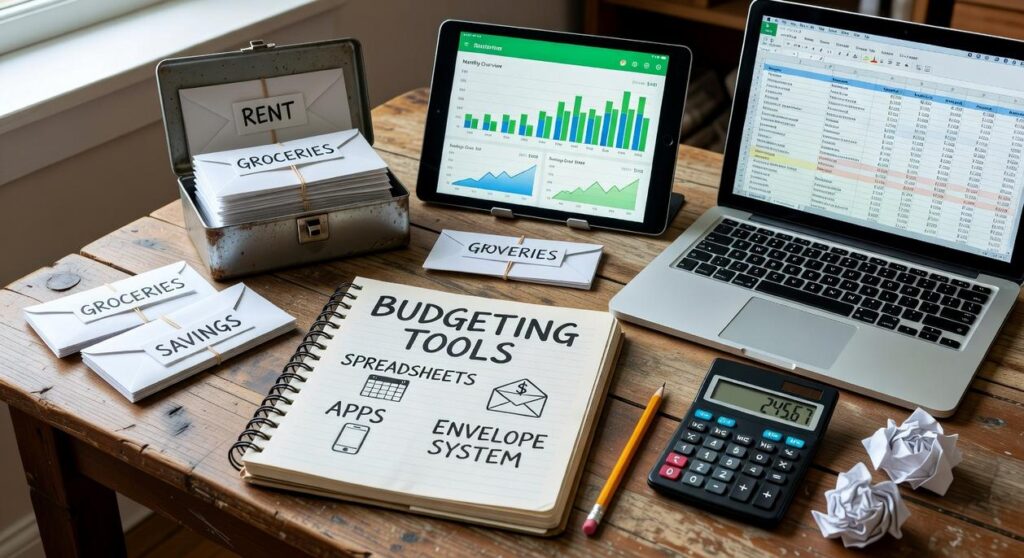
If you’re searching for a clear, practical digital budgeting tools comparison, you probably want more than a feature list. You want to know which tools actually help you control spending, optimize savings, and build long-term wealth without adding complexity to your life.
This article breaks down today’s most popular digital budgeting platforms, comparing usability, automation features, investment integration, security standards, and overall value. Whether you’re focused on daily expense tracking, high-yield saving strategies, or aligning your budget with broader portfolio goals, we’ll show you which tools fit specific financial needs—and why.
Our analysis is grounded in real-world financial strategy principles, performance metrics, and hands-on evaluation of budgeting systems. We focus on how each tool supports sustainable money management, not just surface-level features.
By the end, you’ll have a clear understanding of which platform aligns with your financial habits and long-term wealth strategy—so you can choose confidently and start optimizing your money today.
Finding Your Financial Co-Pilot: How to Choose the Right Budgeting App
Choosing a budgeting app today feels like scrolling Netflix for an hour and still rewatching The Office. The options blur together. Some promise automation magic; others push strict envelopes, Dave Ramsey style.
Here’s the twist: the best app isn’t the flashiest. It’s the one you’ll open every week (yes, even after a long Monday). Think of it as your financial co-pilot, not a backseat driver.
Start with your “budgeting personality.” Are you hands-on and love spreadsheets? Or do you want alerts that nudge you like a Duolingo owl?
This digital budgeting tools comparison helps you weigh cost, core function, and ideal user—so you pick confidently, not impulsively.
Pro tip: try free trials first.
What’s Your Budgeting Style? Identifying Your Financial DNA
Think of your budgeting style as your financial DNA—the built-in tendencies that shape how you manage money. (Yes, even spreadsheets say something about your personality.) Here’s a side-by-side look to help you decide where you fit.
-
The Hands-On Planner vs. The Automated Overseer
The Hands-On Planner assigns every dollar a job using methods like Zero-Based Budgeting (a system where income minus expenses equals zero). Control is everything. In contrast, the Automated Overseer prefers dashboards, auto-categorization, and trend reports. Less manual effort, more big-picture clarity. -
The Efficiency Optimizer vs. The Guided Beginner
The Efficiency Optimizer hunts waste—unused subscriptions, sneaky fees, bill creep. It’s about trimming financial fat. The Guided Beginner, however, wants a clear, step-by-step roadmap built on proven systems.
When doing a digital budgeting tools comparison, ask: Do you want control, automation, optimization, or guidance? The right answer isn’t trendy—it’s personal.
Deep Dive: A Head-to-Head Comparison of Top Budgeting Tools

I’ll start with a confession: the first time I tried a budgeting app, I lasted nine days.
I downloaded it, linked every account, admired the colorful charts—and then ignored the alerts until my dining-out category quietly exploded. The tool wasn’t the problem. My expectations were.
This digital budgeting tools comparison looks at three major types of platforms: zero-based budgeting apps, automation-first trackers, and envelope-style systems. Each works—but only if it fits your habits.
Zero-based budgeting apps (where every dollar is assigned a job before the month begins) are ideal for control-oriented planners. Think of it like giving each dollar a mission briefing. The upside? Clarity. The downside? It requires weekly check-ins. I skipped those check-ins and blamed the app. Lesson learned.
Automation-first trackers sync with your bank and categorize spending automatically. They’re convenient and visually satisfying (those pie charts can feel oddly therapeutic). But automation can create detachment. When I relied purely on auto-categories, small recurring charges slipped by unnoticed. Convenience without awareness is a quiet budget killer.
Envelope-style systems—digital versions of the old cash-in-envelopes method—limit spending by category. When the “Groceries” envelope empties, that’s it. No more artisanal cheese runs. These tools shine for overspenders, but they can feel restrictive if your income fluctuates.
Some critics argue that budgeting apps overcomplicate something that could be done in a spreadsheet. They’re not wrong. A spreadsheet offers flexibility and zero subscription fees. However, behavioral research shows that automation and real-time feedback increase financial adherence (Thaler & Sunstein, Nudge, 2008). For many people, visibility changes behavior.
Another common pushback: “Budgeting tools make you obsess over small expenses instead of focusing on earning more.” Fair point. Income growth matters. But according to a 2023 LendingClub report, over 60% of Americans live paycheck to paycheck. Structure matters just as much as income when margins are thin.
My biggest mistake? Tool-hopping. I’d switch platforms every two months, chasing the “perfect” interface. The truth is, consistency beats features. Pick one system and commit for 90 days.
If you’re still building your foundation, start with creating a monthly budget that actually sticks: https://ocvibum.com/creating-a-monthly-budget-that-actually-sticks/
Pro tip: Choose the tool that matches your weakest habit. Struggle with discipline? Try envelopes. Hate manual entry? Go automated. Love precision? Zero-based is your arena.
The best budgeting tool isn’t the smartest one. It’s the one you’ll still be using six months from now.
At-a-Glance: Feature & Pricing Showdown
Here’s the digital budgeting tools comparison I wish more people started with (because nobody enjoys digging through five pricing pages just to find out there’s no bank sync).
| Tool | Ideal User Style | Pricing Model | Key Feature | Bank Sync | Free Trial |
|---|---|---|---|---|---|
| YNAB | Hands-on planners |
Subscription | Zero-based budgeting | Yes | Yes |
| Mint | Passive trackers | Free (ads) | Auto expense tracking | Yes | No |
| EveryDollar | Dave Ramsey followers | Freemium | Simple monthly planning | Paid tier | Yes |
| PocketGuard | Overspenders | Freemium | “Safe-to-spend” metric | Yes | Yes |
My take? If you’re detail-obsessed, YNAB earns its fee. If you just want visibility without friction, Mint works (ads aside). Pricing and features clearly mirror budgeting style—pay more for control, pay less for convenience. Choose based on behavior, not hype.
Beyond the App: Critical Factors for Your Final Decision
Flashy dashboards are nice. Long-term reliability is better. Before choosing a financial tool, look past the interface and focus on what competitors often gloss over.
- Security & Privacy: Does it use bank-level encryption (AES-256, the same standard major banks use) and two-factor authentication? What happens to your data if you close your account? Many apps mention security, few explain retention policies.
- Platform Availability: iOS, Android, Web—access matters when markets move fast.
- Customer Support & Community: Is help human or just chatbots?
- Scalability: Can it handle investments, property, and advanced tracking?
A proper digital budgeting tools comparison should weigh these—not just aesthetics.
From Insight to Action: Making Your New Budget Stick
You’ve chosen a framework that fits your life. Now comes the harder part: consistency. I’ll be honest—no one can guarantee which habit will click for you. That uncertainty is normal. The real test isn’t picking an app; it’s building a repeatable rhythm.
Commit to a 30-day trial. Open it daily, even when you’d rather not. Progress, not perfection, is the goal (yes, really).
Use a digital budgeting tools comparison if doubts creep in, but don’t let endless research stall action.
- Review spending weekly.
- Adjust categories as needed.
- Celebrate small wins consistently.
Take Control of Your Financial Momentum Today
You came here looking for clarity—how to build smarter money habits, strengthen your portfolio, and use modern tools to accelerate wealth creation. Now you have a clear path. From understanding market momentum to applying disciplined allocation strategies and leveraging high-yield models, you’re equipped to move forward with confidence.
The real pain point isn’t lack of opportunity—it’s uncertainty. Without structure, even strong income and good intentions can lead to stalled growth. Strategic budgeting, intentional investing, and consistent tracking are what separate financial drift from financial momentum.
Your next step is simple: put what you’ve learned into action. Start by implementing a structured plan and using a digital budgeting tools comparison to choose the platform that aligns with your goals. Then refine your portfolio with data-driven insights and disciplined allocation.
Don’t let missed opportunities or inconsistent tracking slow you down. Take control now, apply these strategies, and turn informed decisions into measurable financial growth today.